




La temporada de anidación de tortugas marinas comienza hoy, 1 de mayo
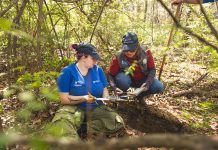
Los voluntarios del Programa de Conservación de Tortugas Marinas del Condado de Escambia recibieron al sol temprano esta mañana, 1 de mayo, dando inicio oficial a la temporada de anidación de tortugas marinas. Hoy realizaron su primera patrulla matutina diaria en Pensacola Beach y Perdido Key, buscando indicios de anidación y otras actividades de las tortugas ocurridas durante la noche.
Los voluntarios comienzan sus patrullas al amanecer para tener la mejor oportunidad de avistar huellas, nidos y otras actividades de las tortugas antes de que las pisadas humanas, el viento y las olas borren los rastros. Los voluntarios y el personal continuarán supervisando los nidos durante el período de incubación, asegurándose de que permanezcan intactos, y se mantendrán a la espera para asistir en casos de varamientos y otros incidentes relacionados con las tortugas. La temporada de anidación se extenderá hasta septiembre, aunque los nidos tardíos pueden eclosionar incluso en octubre.
Cuatro especies de tortugas marinas anidan en el Condado de Escambia. La tortuga boba (*loggerhead*) y la tortuga verde son las especies que anidan con mayor frecuencia, seguidas por la menos común tortuga lora (*Kemp’s ridley*) y la tortuga laúd. Las tortugas hembras llegarán a las playas a lo largo del principio del verano y pueden anidar varias veces en una misma temporada.
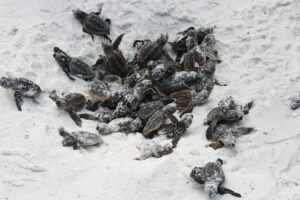
Tras 60 días de incubación, las diminutas crías de tortuga emergerán todas a la vez al amparo de la oscuridad y correrán hacia el agua. Las crías se dirigirán hacia mar abierto, donde hay menos depredadores. Después de unos años de crecimiento y alimentación, regresarán a la zona como juveniles y subadultos. Aquí continuarán creciendo y alimentándose hasta alcanzar la madurez suficiente para aparearse y poner sus propios nidos. A menudo se puede observar a tortugas marinas juveniles y adultas buscando alimento en las bahías y ensenadas, incluso cerca de los muelles de pesca locales y de los arrecifes artificiales.
Sin embargo, las tortugas marinas no son los únicos visitantes del verano. Varias especies de aves costeras anidan en las playas locales durante los meses estivales, entre ellas el charrancito (*least tern*), el chorlitejo nivícola (*snowy plover*), el chorlitejo piquigrueso (*Wilson’s plover*) y el rayador (*black skimmer*). Los nidos de estas aves costeras consisten en pequeñas depresiones poco profundas en la arena, con huevos diminutos y muy bien camuflados. Los huevos se incuban durante un máximo de 30 días antes de que eclosionen los pequeños polluelos, que parecen bolitas de algodón. A menudo, los padres se posan sobre los huevos y junto a los polluelos recién nacidos para protegerlos de los depredadores y del intenso sol de Florida. Además, el verano es una temporada turística muy concurrida, y las grandes multitudes pueden tener un impacto significativo en las tortugas marinas, las aves costeras y otros animales silvestres del litoral. Tenga en cuenta que el acercamiento excesivo de personas y mascotas perturba a las aves.
Ayude a proteger nuestra vida silvestre costera recordando lo siguiente:
- Apague las luces: Las luces brillantes pueden perturbar a las tortugas marinas que están anidando y desorientar tanto a los adultos como a las crías en la playa. Al visitar la playa después del anochecer, mantenga apagados los teléfonos celulares y las linternas. En su lugar, utilice una linterna de luz roja o prescinda de cualquier iluminación. En el caso de las viviendas frente a la playa, apague las luces exteriores cuando no las utilice y mantenga cerradas las persianas y cortinas después de la puesta del sol.
- Deje solo sus huellas: Ayude a mantener las playas libres de obstáculos para las tortugas que anidan y para las crías. Todos los artículos personales —incluyendo sillas, tiendas de campaña, sombrillas, juguetes y equipos acuáticos— deben ser retirados de la playa antes de la puesta del sol cada día. Asegúrese de rellenar los hoyos y de nivelar cualquier castillo de arena.
- Comparta la playa: Manténgase fuera de las áreas de anidación señalizadas y evite colocar sus pertenencias en los bordes de las zonas marcadas. Evite molestar a las aves que descansan en la playa; si observa una tortuga marina anidando, mantenga su distancia. No manipule los huevos ni las crías de tortugas marinas o aves costeras. Los perros solo están permitidos en los parques para perros designados dentro de la playa y deben permanecer siempre atados con correa.
Para obtener más información sobre las tortugas marinas y otros animales silvestres costeros en el condado de Escambia, visite MyEscambia.com/seaturtles y siga al Departamento de Gestión de Recursos Naturales del condado de Escambia en Facebook e Instagram.
Las tortugas marinas y otros animales marinos que se encuentren muertos o heridos deben ser reportados a la División de Recursos Marinos del condado de Escambia llamando al 850-281-5904, o a la línea de Alerta de Vida Silvestre de la FWC (Comisión de Conservación de Vida Silvestre y Pesca) al 1-888-404-FWCC (3922). Todas las labores relacionadas con las tortugas marinas se llevan a cabo bajo los Permisos para Tortugas Marinas n.º 032 y n.º 202.
Sea Turtle Nesting Season Kicks Off Today, May 1
 Escambia County Sea Turtle Conservation Program volunteers greeted the sun early this morning, May 1, as they officially kicked off the start of sea turtle nesting season. Today marked their first daily morning patrol on Pensacola Beach and Perdido Key, looking for nesting and other turtle activity occurring overnight.
Volunteers start their patrols at first light to have the best chance of spotting tracks, nests, and other turtle activity before footprints, wind, and waves obscure the tracks. Volunteers and staff will continue to check on nests during the incubation period, ensuring they remain undisturbed and remain on stand-by to assist with strandings and other turtle-related incidents. The nesting season will run through September, although late season nests can hatch as late as October.
Four species of sea turtle nest in Escambia County. The loggerhead and green sea turtles are the most common nesters, followed by the less common Kemp’s ridley and leatherback. Female turtles will make their way onto the beaches through early summer and may nest several times in a single season.
After 60 days of incubation, the tiny hatchling turtles will emerge all at once under cover of darkness and race to the water. The hatchlings will make their way to open water with fewer predators. After a few years of growing and feeding, they will return to the area as juveniles and sub-adults. Here, they will continue to grow and feed until they are mature enough to mate and lay their nests. Juvenile and adult sea turtles can often be seen foraging in the bays and sounds, including near local fishing piers and artificial reefs.
However, sea turtles aren’t the only summertime visitors. Several species of shorebirds nest on local beaches in the summer months, including the least tern, snowy plover, Wilson’s plover and black skimmer. Shorebird nests are shallow scrapes in the sand with tiny, well-camouflaged eggs. Eggs will incubate up to 30 days before the small, cotton ball-like chicks hatch. Parents often sit on the eggs with newly hatched chicks to protect them from predators and the hot Florida sun.
In addition, summer is a busy tourist season, and big crowds can have significant impacts on sea turtles, shorebirds, and other coastal wildlife. Keep in mind that people and pets approaching too close disturb birds.
Help Protect Our Coastal Wildlife by Remembering:
- Lights Out: Bright lights can disturb nesting sea turtles and disorient adults and hatchlings on the beach. When visiting the beach after dark, keep cell phones and flashlights off. Instead, use a red flashlight or no light at all. For beachfront homes, turn off exterior lights when not in use and keep blinds and curtains shut after sunset.
- Leave Only Footprints: Help keep the beaches obstacle-free for nesting and hatchling turtles. All personal items, including chairs, tents, umbrellas, toys, and water equipment, must be removed from the beach by sunset each day. Make sure to fill in holes and flatten any sandcastles.
- Share the Beach: Stay out of posted nesting areas and avoid setting up belongings on the edges of marked areas. Avoid disturbing birds resting on the beach; if you see a nesting sea turtle, give it space. Do not handle sea turtle or shorebird eggs and hatchlings. Dogs are only allowed in designated beach dog parks and must always be kept on a leash.
For more information about sea turtles and other coastal wildlife in Escambia County, check out MyEscambia.com/seaturtles and follow the Escambia County Natural Resources Management Department on Facebook and Instagram.
Dead or injured sea turtles and marine life should be reported to Escambia County Marine Resources at 850-281-5904 or the FWC Wildlife Alert line at 1-888-404-FWCC (3922). All sea turtle work is performed under Marine Turtle Permits #032 and #202.